Saturday, June 8, 2013

Just looking at emails is enough to increase blood pressure and stress hormone levels, which can increase the risk of heart disease.
Researchers from Loughborough University in the UK tracked 30 government office workers and found that when they were reading and sending emails their blood pressure, heart rate and cortisol levels all increased.
Cortisol is released by the adrenal gland when we're stressed.
Study leader Professor Tom Jackson also analysed written diaries from the participants and found that stress response is worst when we're multi-tasking.
"This study has shown that email causes stress when compared to having email free time," Professor Jackson said in a media release.
"However, if email is compared to other ways of communicating — which was also observed in this study — email is no worse than any other media. Multi-tasking email alongside other communication media, such as phone and face-to-face meetings, increases the risk of becoming stressed."
Their stress levels weren't as bad when sorting emails or when they received emails praising them for a job well done. It was the emails that required an immediate response that evoked the biggest stress response.
Rachel Clements, director of psychological services at the Centre for Corporate Health, told ninemsn our brains trick our bodies into thinking an urgent email is a life-or-death situation.
"We give our body messages that we have to respond quickly, just like an emergency, and the fight or flight response kicks in. That's where we get stress reactions, such as increasing cortisol levels and blood pressure," she said.
"We have become quick at generating the stress response."

Don't check work emails out of hours

Clements said checking our emails after hours is adding to the problem because we never give our brains a chance to switch off from work.
"We used to go home and have a hobby or connect with family or friends. Now that natural respite is being eroded and we are going to work the next day less resilient," she said.
"Even though we think we are just checking, it is still getting the flight or fight response going. Put some boundaries around that so you can have natural respite time to allow your blood pressure to recover so you can go to work feeling calmer the next day."
Professor Jackson said more training is needed to help employees manage their stress levels.
"The key to reducing workplace stress is better training for staff on how to manage their communication media, from better diary control to limiting how often they check their email accounts," he said.
"Stress can lead to long term chronic health conditions such as hypertension, thyroid disease, heart failure and coronary artery disease so it is vital it is managed."
Posted by CNNDD On 4:05 AM No comments READ FULL POST
Ingredients:
1/4 cup butter
1/4 cup sugar
1 tbl grated orange rind
1 tbl grated lemon rind
1 cup orange juice
1/4 cup lemon juice
creme or ice-cream to serve
This sauce is used for crepes.
1/4 cup butter
1/4 cup sugar
1 tbl grated orange rind
1 tbl grated lemon rind
1 cup orange juice
1/4 cup lemon juice
creme or ice-cream to serve
 Directions:
1. Heat butter in pan, add sugar and stir over medium heat until caramlised.
2. Add rinds, juices and simmer uncovered for 10 minutes
3. Fold crepes into quarters and arrange across base of ovenproof dish forming a pattern. Pour sauce over the crepes and bake 10-15 minutes (210'c). Serve warn with creme or icecream.
Posted by CNNDD On 4:02 AM No comments READ FULL POST
Thinking of having a baby? You may want to consider moving to Finland -- the best place in the world to be a mother, according to Save the Children's 14th Mothers' Index.

The index, part of the group's annual State of the World's Mothers report, is intended to illustrate the link between maternal and child well-being. Each year, nearly three million babies die within their first month of life -- more than a third die on their day of birth -- and 287,000 women die from pregnancy or childbirth, according to the report.

The index ranked countries according to five indicators of a mother's well-being: maternal health (the risk of maternal mortality); children's well-being (the mortality rate of children under five); educational status (number of years of formal schooling a woman receives); economic status (gross national income per capita); and political status (the participation of women in national government).

Finland was followed closely by its Nordic neighbors and other Western European countries. Australia was the only non-European country to place in the top 10.

The United States ranked 30th, performing poorly in under-five mortality rates, maternal death, and political participation, compared to other highly-developed countries.

Industrialized countries account for only 1% of newborns dying on their first day of life, but among them the U.S. has the highest mortality rate, with approximately 11,300 deaths each year. The report attributed this to the country's high rate of premature births (one in eight births) -- the second highest in the industrialized world.

The U.S. also has the highest teenage birth rate of any industrialized country -- and teenage mothers in the U.S. tend to have less education, prenatal care, and financial resources than their older counterparts.

Sub-Saharan African countries ranked as the 10 worst places to be a mother, with the Democratic Republic of the Congo coming in last place.

While newborn, child, and maternal death rates have declined across the developing world in the past two decades, the report found that progress has been the slowest in this region. Developing countries lack basic healthcare for women and their babies before, during, and after delivery, accounting for the majority of newborn and maternal deaths.

The Mothers' Index ranked 176 countries -- all countries are included except those with insufficient data or a national population below 100,000.

Top 10

1. Finland

2. Sweden

3. Norway

4. Iceland

5. Netherlands

6. Denmark

7. Spain

8. Belgium

9. Germany

10. Australia

Bottom 10

167. Cote d'Ivoire

168. Chad

169. Nigeria

170. Gambia

171. Central African Republic

172. Niger

173. Mali

174. Sierra Leone

175. Somalia

176. Democratic Republic of the Congo
Posted by CNNDD On 3:52 AM No comments READ FULL POST

Friday, June 7, 2013

Many of us are faced with annoying challenge of sticking to our goal of losing unwanted fat, following a healthy diet and getting enough sleep. The question that crops up to our mind is -Why is our self-control so strong on some days and so weak on others?
 
To answer that, willpower is not dependent only on psychological strength. There are certain physiological and emotional factors, such as blood sugar, brain chemistry, lack of sleep, hormones etc. which control our power of self- resistance.What really remains is to learn ways to handle fall-apart situations and gain an upper hand over them

  1.  Meditate: Meditation is one of the most powerful methods to strengthen your resolve, develop self-control and maintain focus on your goal. Practicing mindfulness meditation for a few minutes(3-5 min) each day can actually boost willpower by building up gray matter in areas of the brain that regulate emotions and govern decision making. Meditation actually creates physical changes in the brain in as little as eight weeks, according to many studies including one conducted by Massachusetts General Hospital (MGH) researchers. The study found that an 8-week mindfulness meditation program made measurable changes in the gray matter of brain areas associated with memory, sense of self, empathy and stress.

  2.  Get Yourself Clicked. Set a goal of one 10-minute exercise session per week. Then increase it to two 10-minute sessions. Gradually add minutes to each workout (and eventually add one or more additional workouts to your week), until you're exercising as long and as frequently as you should in order to reach your goals. The simple act of setting aside some time for exercise every day, no matter how little, and sticking to it is enough to start building the habit. You can motivate yourself to lose weight by taking some self-portraits. We usually don’t have the best idea about how we truly look until we see ourselves in a photograph. Keep a picture with you and look at it when you feel like giving up. 

  3.  Find an accountability buddy—someone who knows about your plan and is willing to give you a push when you feel like slacking off.

  4. Join a Team or make a Fitness Friend. It’s always harder to let someone else down than it is to let yourself off the hook.   

  5. Employ an excuse buster. Find a friend, family member whose judgment and opinion you respect. Each time you find yourself thinking about skipping an exercise session or blowing your meal plan, write down the reason for your choice. Share this reason with your excuse buster and get her honest opinion about whether the reason for your choice is reasonable or just an excuse. You’ll probably find that this makes it a lot harder for you to believe your own rationalizations.

  6. Don't skimp on sleep: Research shows that getting less than 6 hours of snooze time decreases decision-making abilities and leads to failure of self-control as the day wears on. One mechanism in play: ghrelin, a hormone that triggers hunger. One study of healthy adults found that after they got 4 hours of sleep just 2 nights in a row, their levels of ghrelin increased by 28% and their appetites by a whopping 23%, especially for salty snacks and sweets.

  7. Don't Starve: A blood-sugar dip, occurs after you skip a meal, which can impair the areas that oversee planning and self-restraint. Research shows that exerting your willpower decreases glucose even more. So if you skip lunch and spend the afternoon fighting the desire to dip into a coworker's candy jar, you could set yourself up for an evening binge. When you eat a donut and coffee for breakfast and then nothing until lunch then you will get a big blood sugar spike and then a drop soon after and be just dragging your way until lunch. If you eat consistently small but evenly spaced meals every couple of hours during the day then you will not have this bloodsugar problem

  8. Pen down your Emotions: Maintain a diary to pen down your feelings. As you know depression is grief and anxiety is fear 'unexpressed', by writing down your feelings, you can release negative feelings trapped inside. A very successful healing process will be initiated, if if you can give way to your grief and fears in a diary.

  9. Laugh it Off: Laughter is a fabulous healer and relaxant. The act of laughing also increases the oxygen supply to the lungs, stimulates the production of endorphins and can produce a feeling of euphoria. Occasionally it may also open the gates to tears-another positive release.

  10. Love & Pamper Yourself: Shun away negative thoughts, like “I’m a failure.” “I should give up.” “He hates me.” These thoughts manipulate your feelings, so that what begins as a negative thought ultimately lead to exercise drop out and binge eating. You are special, unique and highly loved and appreciated. Remember, YOU are a unique creation of God and by staying connected to friends and family, making healthy lifestyle decisions, and keeping stress under control you can have a hugely positive impact on your existance. Consciously do something that can make you feel good. Get a new haircut, polish your nails, or get enough sleep.


Posted by CNNDD On 3:49 PM 2 comments READ FULL POST
The model, DJ and ambassador for 'Quit Smoking in 7 Days' shares her tips on how she quit
1-First thing in the morning, I always needed to have a cup of coffee but it used to make me desperate for a morning cigarette. By having herbal tea instead, I found that I stopped associating my morning drink with smoking. Plus, herbal teas are better for you anyway!
2-Drink lots, especially water and orange juice. The water flushes all the nicotine out of your system and means you will lower your craving, and drinking orange juice will also give you a vitamin boost.
3-Every time you think you want to smoke, go and do something else, anything! I often used to smoke just because I was bored. Fill the gaps in your day where you would usually smoke by going to the gym, experimenting in the kitchen or just taking up a new hobby.
4-Start putting all of the money that you used to spend on cigarettes in a kitty. When you see how much money you’ve saved at the end of the month just by cutting out cigarettes, you’ll be amazed!
5-My saving grace was working with Tim Smale, a clinical hypnotherapist. He created an online programme called ‘Quit Smoking in 7 Days’ which sends out up to 20 minutes of daily video content. It is a simple and painless way to stop smoking that can be done in the comfort of your own home. It’s great for people like me who really want to quit but need a helping hand!
6-Exercise, even if you just go for a walk around the block. The more exercise you do, the healthier you feel and the less you want to smoke.
7-Make a smoke-free diary. It helps to write down when you have a craving, and then you can start to see patterns of what makes you crave in the first place.
8-Wash anything you own that still smells of cigarettes, being around the smell all the time can be detrimental to a recent quitter.
9-Try not to talk about smoking all the time, even if you are just talking about how you have recently quit. Do not let smoking be the most important thing in your life.
10Treat yourself! At each little milestone, I gave myself something to look forward to, so book yourself a massage or do something you enjoy. Celebrate each success!
Posted by CNNDD On 3:35 PM No comments READ FULL POST
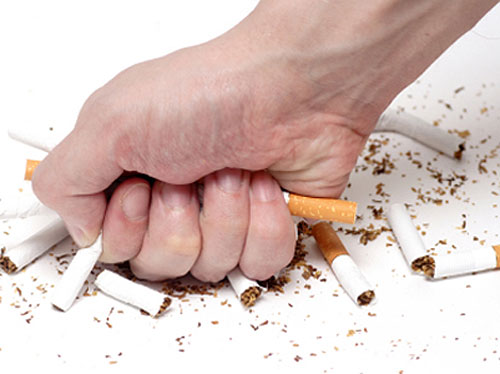
The chemicals in cigarette smoke (around 4000 of them) get into the bloodstream of smokers and may induce the damage to the eye.
•The chemicals in tobacco smoke can cause inflammation of the conjunctiva (the thin membrane covering the eye), resulting in bloodshot, irritated eyes.
•In a study of nearly 21,000 U.S. male physicians, spanning an average of 13.6 years, researchers found a direct link between smoking and the development of cataracts. The study, known as Physicians Health Study I, evaluated physicians between the ages of 40 and 84 who had no prior history of cataracts before 1982.
Participants were asked to complete questionnaires that included information such as: number of cigarettes smoked daily, age when they started smoking, and their age if they stopped smoking. Each participant received annual eye exams and were required to report the results to the study investigators. The participants' ophthalmologists and optometrists confirmed the results.
•Smoking has also been linked to eye diseases such as age-related macular degeneration. The causes of macular degeneration are not completely understood, but smoking is believed to be the main preventable risk factor. Evidence indicates that more than a quarter of all cases of AMD are linked to current or past exposure to smoking.
•Study results appear mixed about a direct association between smoking and diabetic retinopathy, but most experts agree that smoking should be avoided to help help stop progression of the disease.
•Smoking causes shrinkage or constriction of blood vessels, shown to be directly linked to rising inner eye pressure (intraocular pressure) that can lead to glaucoma and accompanying optic nerve damage.
•Optic neuritis : A landmark study found a strong association between factors such as poor nutrition and smoking linked to a 1992-1993 epidemic of optic nerve damage among Cuban citizens.
Although smoking is associated with several eye diseases, including nuclear cataract and thyroid eye disease, the most common cause of smoking related blindness is age related macular degeneration, which results in severe irreversible loss of central vision.

How does smoking damage the eyes?
When you inhale cigarette smoke thousands of chemicals get into your bloodstream and can travel throughout your body. These chemicals cause damage to the macula (the most sensitive part of the retina, at the back of your eye). Tiny blood vessels can burst through the macula, leading to irreversible damage, or alternatively, the cells of the macula slowly die. Both ultimately lead to loss of vision.

Can this damage be reversed?
No. Laser treatment can sometimes kill the new blood vessels before they hit the macula. However, most people are not able to be helped this way because the blood vessel has already involved the very centre of the macula, and even after treatment, the condition recurs in half the cases and in almost all those who continue to smoke. A new treatment, photodynamic therapy (PDT) may be able to help some to reduce the severity of vision loss, but the majority of people with macular degeneration will still not be able to be treated.

If I quit smoking will my eyes recover?
Your risk of macular degeneration will be reduced if you quit smoking, however existing damage to the eyes cannot be repaired, particularly once vision is affected.
Posted by CNNDD On 3:32 PM No comments READ FULL POST

Wednesday, June 5, 2013

Ingredients:
2 large tomatoes (variety of your choice)
2 large eggs
¼ cup of white cheddar cheese, thinly sliced
¼ cup of Gruyere cheese, thinly sliced
3 tablespoons Egyptian roumy cheese (can be substituted with parmesan), finely grated
1 tablespoon of thyme, preferably fresh
Salt and pepper, to taste
Directions:
Preheat the oven to 220 degrees Celsius. Slice off the top of each tomato. Using a sharp knife, carefully carve around the inside of each tomato and remove the pulp and seeds. Place the tomatoes in a shallow oven-proof baking dish, with or without the tops. If your tomatoes don't stand upright, you can lean them against the sides of the baking dish. This allows the egg to stay centered as well. Depending on the size of the tomatoes you use, layer the white cheddar and gruyere cheese at the bottom. Over the cheese, sprinkle some fresh thyme leaves. Crack one egg into each tomato cavity. The trick is to keep all the egg whites contained in the tomato with minimal leakage. Do this slowly and don't rush it.
Bake your egg in a tomato for 10 minutes. By this time, they will begin to set. After 10 minutes, slide your oven rack carrying your baking dish out and sprinkle with roumy cheese. Push it back into the oven and bake for another 7-10 minutes or until the eggs are set to your liking. Remove the eggs from the oven and allow them to rest for two minutes. Remove from the baking dish and sprinkle with salt and pepper then garnish with fresh thyme. Serve.
Posted by CNNDD On 10:26 AM No comments READ FULL POST
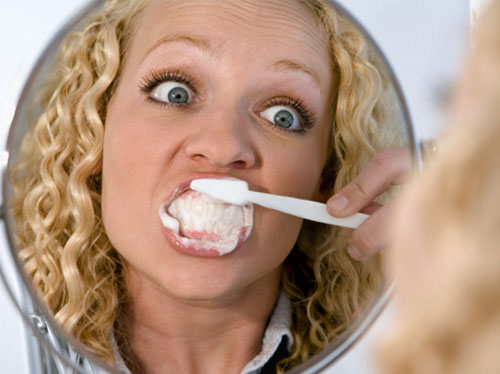
Are you hurting instead of helping your teeth when you brush? We pinpoint common brushing mistakes—and how to protect your pearly whites.

It’s not exactly a newsflash that one of the most important reasons to brush your teeth is to fight off cavities (not to mention prevent bad breath). But what if the way you brush your teeth actually makes you more susceptible to cavities, tooth decay and gum disease? Scary.

Turns out, there are a host of common mistakes that many of us make morning and night that can damage teeth and turn a healthy smile upside-down. Find out what you’re doing wrong—and how to break these bad habits for better teeth.

You don’t brush for long enough
Most people don’t spend nearly enough time brushing their teeth, notes prosthodontist Michael Lenchner. Most dentists recommend brushing for two or three minutes, but few people ever make it to that. Next time, check your watch see how long your routine takes. Chances are, whether you’re rushing to get to work or ready to collapse into bed, you’re only brushing for a minute or so. To go the distance, bring an egg timer into the bathroom and set it for two or three minutes before you get started, or use an electric toothbrush (like Sonicare) with a two-minute timer.

You’re not watching what you’re doing
Make a point to look in the mirror while you brush your teeth and see where the brush is actually going. It’s easy to miss the area right at the gum line, which is the most important part. That’s where plaque, tartar and bacteria can build up, which cause the gums to become inflamed and infected (aka gingivitis). Also keep a close eye on the back molars. If the brush head hits your cheek before you get to them you could miss them completely. Bonus: Paying better attention to your chompers will increase the likelihood that you’ll notice if something is awry, like chips, cracks or “bruxisms,” which are cupped out or overly shiny areas where your upper and lower teeth might be wearing into one another. Wearing away can also be a sign of TMJ problems, clenching or sleep apnea. Mention any unusual observations at your next dentist appointment.

Your technique needs a major makeover

Enamel is made of tightly packed, glass-like rods that extend out toward the surface of the tooth. When you brush side-to-side, these brittle rods can break, leading to cracks and weakening teeth. Dr. Lenchner likens it to sawing down a tree. Remember: Teeth are not trees. Hold the brush so the bristles are at a 45-degree angle to the surface of the teeth and brush in small circles. Focus on a few teeth at once, then move on to the next set, continuing around from one side to the other, top and bottom, front and back. It’s okay to brush in straight lines on the chewing surfaces. After completing your circles, brush away from the gum line to clear off loosened plaque and bacteria.

You’re brushing too hard
The chances of enamel breakage are greater when you brush too hard. And if you have a tendency to clench or grind, the stakes get even higher. Those habits combined with hard sideways brushing can cause notches near the gum line called abfraction lesions. With continued pressure, they can deepen into the tooth’s inner dentin and cementum layers. What’s more, aggressive brushing can be traumatic for sensitive gums, causing irritation and recession.

You’re using the wrong brush
Be sure to buy soft or ultrasoft brushes to minimize damage. Lenchner warns, though, that even soft bristled toothbrushes can cause abrasions if used incorrectly. He recommends Oral B or Sonicare soft brushes. “All of the electric toothbrushes are great tools if they help you brush longer and get you to the right places,” he says. If you’re willing to invest—to the tune of nearly $189—he is a big proponent of the newly released Emmi-Dent, which looks like an electric brush, but uses ultrasound pulses to kill bacteria without any brushing at all.

If you have a Water Pik, keep it on the lowest setting, even if it doesn’t feel like it’s doing much. Anything higher can erode your gum line. If your dentist gives you a special brush for cleaning implants or crowns, only use it as directed so you don’t disrupt proper gum growth.

As horrifying as it may sound, your toothbrush can be a veritable haven for germs, including strep and staph. You should replace a regular toothbrush every three months—sooner if the bristles look worn, frayed and bent. Over time, the bristles get damaged, like split ends in your hair, and bacteria nestle in those tiny tears. To minimize germs’ day-to-day growth, rinse your brush with hot water after use and allow it to dry completely.
Posted by CNNDD On 10:17 AM No comments READ FULL POST
Being a single parent isn't easy and the transition seems impossible. Here are some tips to help you cope.

Don't waste time being angry After relationship breakdown or sudden bereavement it is very easy to be angry to 'be left holding the baby' so to speak. This is unproductive and ultimately not good for you or your child as it feeds your negativity about the situation. This is easier said than done, but if you can avoid it then you can focus more on you and your child.

Plan for the future Even if you can only cope with planning next week then try to plan it in mind-numbing detail. Aside from anything else it helps with step one as your attention and time is taken up so that you don't have the time to dwell on the past.

As a single parent it is really important to become organised as you have to cope with EVERYTHING and this is easier with planning. If you are a stay at home parent this is particularly important as you have more time to dwell, become negative and if you stay at home all day you won't socialise with many adults which can lead to becoming depressed and unmotivated.

Try looking for free groups, such as toddler and baby groups at local libraries, churches, etc. If your child is at school then it may be worth looking for a part time job during that period, not just for the extra money, but for the social interaction. You will feel better if you are doing something for yourself every once in a while.

Don't be afraid to say no to things that drain your time and energy, such as volunteering at your child's school or fundraising for the PTA.

Be consistent in your parenting. Establish house rules and stick to them, such as early bedtime on school nights.

If you are a working parent then it is also very important as you need to balance work and home life (try searching articles to help with this) and need to arrange a back up in case you don't reach your child's school etc on time.

Plan meals, including school lunches, several days in advance Shop for groceries once a week. Keep a few frozen or boxed meals on hand for evenings when you're running late. Fast-food meals should be an occasional treat instead of a habit.

Set up a support network If your child is at school or nursery then socialise with the other parents. Make friends arrange play dates etc. This is important as it helps your child make friends, but it also helps establish a support network so if you are caught in traffic you can ring another parent to pick up your child from school. Make sure you are prepared to return the favors!

Don't expect too much of yourself If you have a meltdown one day and find yourself in tears, don't be upset with yourself. Pick yourself up, accept that everyone struggles occasionally and try again. Be honest with your child; it's perfectly fine to say that you are short-tempered because you had a bad day at work.

Have time for yourself Make sure you can schedule yourself some time, if you can't afford a babysitter etc then get your child in a routine of going to bed at a certain time and have an hour when they are in bed where you don't do any housework or chores and you do something you like, such as a glass of wine and a film, a long chat with an old friend on the phone, etc. You will feel better for it and it stops life feeling like one long chore, which is no good for you or your child.

Be financially stable You have to deal with everything now so be organised. Write down what is going in each week, what needs to be spent and how much spare money there is. Be aware that there will be many unexpected costs (such as your child suddenly growing out of all the trousers in the house!) and you need to be saving money for that eventuality. Make sure you are getting everything you are entitled to such as tax credits, child benefit, income support etc.

Have fun Make sure you do an enjoyable activity with your child at LEAST once a week, that way you remember the joys of parenthood as well as the stress and worry.

If you are separated from an ex, then try your best to put your child first Make sure you focus on your child's best interest before your anger. If your ex is dating someone, don't pump the child for information about that person.

Focus on what suits your child, if your ex pays nothing and turns up less than once a month then rather than fighting this and trying to make them a responsible parent try and focus on being a good parent yourself and see if your child is happy with the arrangement. If they are, then by all means contact child maintenance, but make sure that you don't contact your ex about money or hassle him to turn up more as this will just become an argument.

If it distresses your child then talk to your ex calmly to explain this. Rather than screaming at him or her 'Josh waited two hours for you to turn up and you didn't even ring to say you wouldn't be there. He was in tears all night all because you are a terrible parent!' try saying something like' this arrangement isn't good for Josh as he wants to see more of you and he gets very upset when he expects to see you and then you aren't there. If things are too busy for you then I understand that but Josh doesn't so you need to decide if you have the time to see him. If not then it's a shame for both of you but I understand and josh will adapt eventually as long you stay away and give him time to deal with being without you. What he can't cope with is the inconsistency. I am leaving it up to you to decide and you can let me know.' If you are calm and reasonable then your ex may consider the situation rather than reacting to your anger.
Posted by CNNDD On 2:17 AM No comments READ FULL POST
Think about it: If you’re feeling sleepy at work, you may be tempted to reach for a cup of coffee (or several cups) and a doughnut for a quick shot of energy. Later you may skip the gym and pick up takeout on your way home to your family -- no time to cook. When you finally find yourself back in your bed, you are too wound up to sleep.

It’s a vicious cycle, and eventually this sleep deprivation can sabotage your waistline and your health.

It starts out innocently enough. “When you have sleep deprivation and are running on low energy, you automatically go for a bag of potato chips or other comfort foods,” saysSusan Zafarlotfi, PhD, clinical director of the Institute for Sleep and Wake Disorders at Hackensack University Medical Center in New Jersey.

The immediate result? You may be able to fight off sleepiness. The ultimate result? Unwanted pounds as poor food choices coupled with lack of exercise set the stage for obesity and further sleep loss.

“Sleep debt is like credit card debt,” Zafarlotfi says. “If you keep accumulating credit card debt, you will pay high interest rates or your account will be shut down until you pay it all off. If you accumulate too much sleep debt, your body will crash.”

Not getting enough sleep is common -- even talked about with pride. “We brag about an all-nighter, but we do pay a price for staying up late and getting up early,” says Mark Mahowald, MD, director of the Minnesota Regional Sleep Disorders Center in Hennepin County.

Understanding the sleep-diet connection

The sleep-diet connection is regular fodder for diet books and magazine articles. Maybe you have even heard about the sleep diet, which suggests you can lose weight while you catch your ZZZs.

And it’s true, sort of.

“It’s not so much that if you sleep, you will lose weight, but if you are sleep-deprived, meaning that you are not getting enough minutes of sleep or good quality sleep, your metabolism will not function properly,” explains Michael Breus, PhD, author of Beauty Sleepand the clinical director of the sleep division for Arrowhead Health in Glendale, Ariz.

On average, we need about 7.5 hours of quality sleep per night, he says. “If you are getting this already, another half hour will not help you lose 10 pounds, but if you are a five-hour sleeper and start to sleep for seven hours a night, you will start dropping weight.”

Exactly how lack of sleep affects our ability to lose weight has a lot to do with our nightly hormones, explains Breus.

The two hormones that are key in this process are ghrelin and leptin. “Ghrelin is the ‘go’ hormone that tells you when to eat, and when you are sleep-deprived, you have more ghrelin,” Breus says. “Leptin is the hormone that tells you to stop eating, and when you are sleep deprived, you have less leptin.”

More ghrelin plus less leptin equals weight gain.

“You are eating more, plus your metabolism is slower when you are sleep-deprived,” Breus says.

The sleep-weight loss solution

So what can you do about sleep deprivation?

A lot, says Breus. First, look at how much you sleep vs. how well you sleep. “Some people such as new moms may only get to sleep for a four-hour stretch. And there are some people who get 7.5 hours of sleep that is poor quality because of pain or an underlying sleep disorder, and this has the same effect as if they got less sleep,” he says.

Trouble-shoot both with improved sleep hygiene, he says.

For starters, avoid any caffeine in the afternoon because it will keep you in the lighter stages of sleep -- which are associated with poor sleep -- at night. Breus recommends only decaf from 2 p.m. on. Exercise also helps improve sleep quality. How soon before bed should you exercise? It depends -- everyone is different. It’s more important that you exercise than it is when you exercise. Breus says to be safe, don’t exercise right before going to bed. “But some people exercise better before bed and it doesn’t affect their sleep,” he says.

Watch what you eat before bedtime. “Pizza and beer before bedtime is not a good idea,” says Breus. “Neither is eating a big meal close to bedtime.” He suggests eating a few healthy snacks and then having a light meal -- like a bowl of cereal -- if you’re running close to bedtime. Heavy, rich meals before bed can also increase risk of heartburn, which will certainly keep you up all night.

What if you are getting enough hours of sleep but wake up and feel sleepy the next day? “Talk to your doctor about seeing a sleep specialist,” Breus says. After conducting a thorough evaluation and sleep study, in which you are monitored while sleeping, the sleep specialist can help identify any underlying problem. Together you can develop a treatment plan so that you get more high-quality sleep -- and maybe even slim down.
Posted by CNNDD On 2:14 AM No comments READ FULL POST

Sunday, June 2, 2013


Ingredients (one person):

150g couscous
1 red pepper
1 tomato
A few leaves of fresh mint
1 bunch parsley
10 black olives
1 lemon
Salt and pepper
4 tbsp. tablespoons olive oil

preparation:

Put the couscous in a bowl, pour in the same amount of hot, lightly salted water. cover
and let rise.

In another bowl mix the tomato and pepper diced, chopped herbs, the juice of oil
lemon a little salt and pepper.

Fluff the cooled couscous with a fork. mix with the preparation and olives. refrigerate
least 1 hour or better overnight for the salad is well flavored.

Posted by CNNDD On 3:34 AM No comments READ FULL POST

Saturday, June 1, 2013

Ingredients:

2 cups Poha (Beaten Rice)
1 Potatoes
1 Onions
2 Green Chillies
1 tsp Chana dal
1 tsp Urad dal
1/4 tsp Mustard Seeds
1 sprig Curry leaves
2 tsp Peanuts
4 tblsp Oil
1 pinch Turmeric powder
1 Lemon
Few Corainder leaves
Salt to taste 
How to make aloo poha :

  • Soak the poha in water. Wash and drain all the water.
  • Add some salt , turmeric powder , keep aside.
  • Peel and cut the potatoes into small cubes, chop the onions, chillies, corainder leaves.
  • Heat oil and put chana dal, urad dal, mustard seeds, peanuts, curry leaves and fry until they crackle.
  • Add potatoes , saute for few minutes, then add chopped onions, chillies.
  • Cook till they are done. Add the poha, corainder leaves and stir.
  • Keep it on slow flame for 5- 7 minutes.
  • Let it cool for sometime and add then lemon juice.
 
Posted by CNNDD On 10:28 AM No comments READ FULL POST

Followers